Hardscaping Design Ideas: A Professional Editorial Guide
Hardscaping design ideas serve as the structural foundation for any sophisticated exterior environment, providing the essential permanence required for functional outdoor living. These non-living elements define the spatial geometry of a property, balancing the organic fluidity of softscaping with the rigid predictability of masonry and timber. For the modern homeowner or landscape architect, mastering these concepts requires an understanding of both aesthetic composition and civil engineering principles.
The contemporary approach to these installations has shifted from purely utilitarian surfaces to integrated ecosystems that manage water, light, and movement. Whether designing a compact urban courtyard or a sprawling rural estate, the underlying logic remains consistent. Success depends on the interplay between materials, topography, and the specific needs of the human occupants who will navigate the space.
Industry standards now emphasize long-term durability and environmental stewardship as much as visual appeal. This evolution reflects a growing awareness of how inert materials interact with natural cycles, such as thermal expansion and hydraulic pressure. Professionals and enthusiasts alike must view the exterior as an extension of the architectural envelope rather than a secondary consideration.
Hardscaping Design Ideas
At its core essence, hardscaping is the discipline of creating “human-habitable zones” within a wild or semi-wild environment. Think of hardscaping as the skeletal system of a landscape, while the plants and soil represent the muscular and vascular systems. Without a strong skeleton, the entire organism loses its form and fails to function under the stresses of daily use or environmental change.
The core principle involves the manipulation of “mass and void” to create specific experiences. A large stone patio provides a mass that anchors a social area, while a narrow gravel path creates a void that directs the eye and the body toward a focal point. Professionals often see these elements as “floor, walls, and ceiling” of an outdoor room, using vertical hardscape to provide privacy and horizontal hardscape to provide stability.
Common misunderstandings often arise when hardscaping is treated as a 2D surface project rather than a 3D structural endeavor. Beginners often focus on the color of a stone, whereas veterans focus on the compaction of the sub-base and the pitch of the drainage. A beautiful surface that fails to manage subsurface water will inevitably fail, regardless of the initial aesthetic investment.
The Architecture Of Flow And Friction
Movement through an exterior space is dictated by the friction provided by the hardscape. Smooth, large-format pavers encourage fast movement and formal interaction, while irregular flagstones with wide joints create a slower, more contemplative pace. Designers use these variations to “signal” the intended use of different zones without the need for signage or barriers.
Balancing Durability With Permeability
Modern hardscaping design ideas must grapple with the tension between solid surfaces and water infiltration. Impermeable surfaces contribute to runoff and heat islands, whereas permeable systems allow the earth to breathe and process moisture. Professionals now prioritize “soft hardscaping” techniques, such as permeable pavers or dry-laid stone, to achieve structural goals without disrupting local hydrology.
Historical Evolution Of Exterior Structures
The history of hardscaping mirrors the history of human civilization, evolving from the primitive stacking of fieldstones to the precision-engineered modular systems of the modern era. Early Roman road construction established the baseline for sub-base preparation and drainage, principles that remain foundational to professional installations today. These ancient builders understood that the longevity of a surface is entirely dependent on what lies beneath it.
In the 18th and 19th centuries, formal European gardens introduced the concept of hardscaping as a status symbol and a tool for geometric perfection. The use of parterres, balustrades, and intricate brickwork was intended to demonstrate human mastery over the chaotic natural world. This “old way” of thinking prioritized control and rigid symmetry, often at the expense of local ecology and ease of maintenance.
The shift toward “modern standards” occurred in the mid-20th century with the rise of the suburban landscape and the introduction of mass-produced concrete products. Today, we are seeing a return to naturalistic materials, albeit refined through modern technology. We no longer just stack stones; we calculate load-bearing capacities and use geogrids to stabilize slopes that would have been unbuildable for previous generations.
From Utilitarian To Experiential
Historically, hardscaping was often a byproduct of necessity, such as a retaining wall to prevent erosion or a simple path to keep feet dry. In the modern era, these elements are designed for “sensory ROI.” We select stones for their thermal properties, ensuring they are cool to the touch in summer, or for their acoustic properties, using walls to bounce or muffle ambient sound.
The Obsolescence Of Rigid Mortar
One of the most significant shifts in industry standards is the move away from rigid, mortared joints in favor of flexible, sand-set systems. Rigid structures are prone to cracking during seismic shifts or freeze-thaw cycles. Modern hardscaping design ideas favor systems that “breathe” with the earth, utilizing polymeric sands and flexible edge restraints to maintain integrity without brittleness.
Strategic Foundations And Mental Models
Approaching a complex exterior project requires specific mental models that help a designer categorize information and prioritize decisions. For a layperson, these frameworks simplify the overwhelming number of choices. For a professional, they act as a checklist to prevent expensive engineering errors or aesthetic inconsistencies during the construction phase.
The first model is “The Rule of the Golden Ratio,” which applies to the scale of hardscape features relative to the house. If a patio is too small, it feels like an island; if it is too large, it swallows the architecture. Maintaining a ratio where the hardscape occupies approximately one-third of the usable outdoor space often yields the most balanced results.
The second model is “The Hierarchy of Utility,” which dictates that structural safety and drainage must always precede decorative finishes. This framework forces the designer to solve the “invisible” problems first. If the slope of a yard is 4%, the mental model dictates that a retaining wall or a graded terrace is the first hardscaping design idea that must be implemented before any discussion of material types occurs.
The Inside-out Perspective
This model encourages looking at the hardscape through the windows of the interior. Since most people spend more time looking at their yard than sitting in it, the hardscape must be composed as a visual “still life.” Strategic placement of walls or paths can frame views or hide unsightly utility boxes, ensuring the exterior adds value to the interior living experience.
The Lifecycle Thinking Framework
This framework assesses materials based on their “Cost Per Year of Service” rather than their initial purchase price. A pressure-treated wood deck may be inexpensive today but requires significant maintenance and replacement in 15 years. A natural stone terrace may cost three times more upfront but will last for a century with minimal intervention, representing a higher long-term value.
Detailed Taxonomy Of Hardscaping Variations
Categorizing hardscaping design ideas requires a nuanced look at material properties, installation methods, and intended use cases. The taxonomy can be broken down into horizontal surfaces, vertical structures, and water-management elements. Each category has its own set of rules regarding soil preparation and material selection.
Horizontal surfaces, such as patios and walkways, are the workhorses of the landscape. They must withstand foot traffic, furniture weight, and environmental exposure. Vertical structures, including retaining walls and seat walls, serve to manage grade changes and create a sense of enclosure. Finally, accessory structures like pergolas or outdoor kitchens integrate mechanical systems into the hardscape environment.
| Variation | Target Audience | Core Advantage | Trade-offs | Relative Complexity |
|---|---|---|---|---|
| Natural Flagstone | High-end residential | Timeless aesthetic; unique patterns | Higher labor cost; irregular thickness | High |
| Interlocking Concrete Pavers | Suburban homeowners | Uniformity; high durability | Potential for “industrial” look | Moderate |
| Permeable Gravel Systems | Eco-conscious/Modernists | Superior drainage; lower material cost | Requires regular raking; can be unstable | Low to Moderate |
| Engineered Wall Blocks | Properties with slopes | Structural predictability; fast install | Limited design flexibility | High (Structural) |
| Porcelain Outdoor Tiles | Contemporary/Minimalist | Stain resistant; indoor/outdoor flow | Requires concrete slab; slippery when wet | Very High |
Choosing the right path involves analyzing specific constraints like budget, local climate, and existing soil conditions. If the soil is heavy clay with poor drainage, a gravel-based system might be risky without extensive sub-surface piping. Conversely, if the goal is a seamless transition from a modern kitchen to an outdoor terrace, porcelain tiles on a reinforced slab would be the logical choice despite the higher complexity.
Patios And Terraces: The Primary Social Nodes
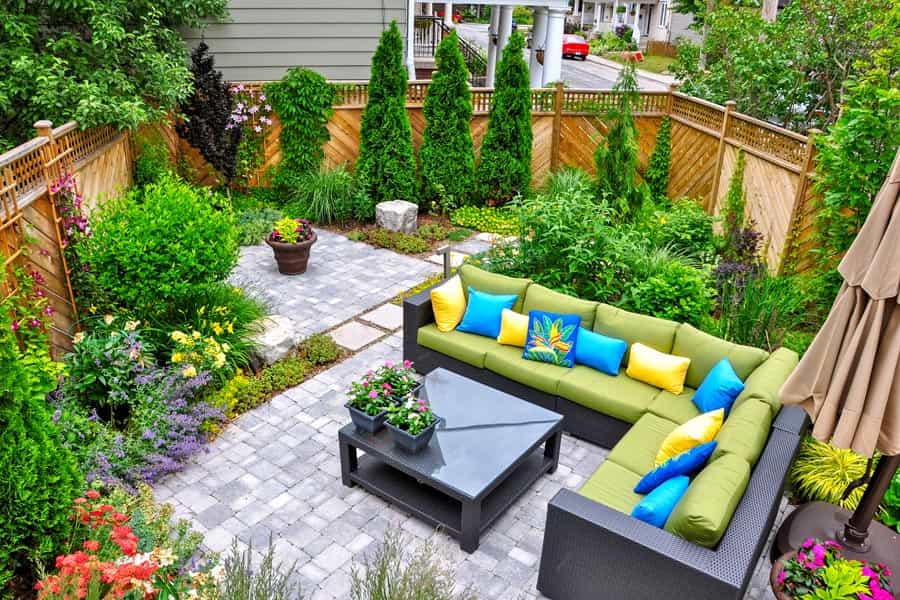
Patios are the most common hardscaping design ideas because they provide a stable “floor” for furniture and gatherings. The design of a patio should mirror the way humans naturally congregate. We prefer “prospect and refuge,” meaning we like to sit with a solid wall behind us and a clear view of the surroundings in front of us. Incorporating seat walls into a patio design fulfills this psychological need.
Walkways And Circulation Paths
Walkways are the “arteries” of the property. A primary walkway should be at least 48 inches wide to allow two people to walk side-by-side comfortably. Secondary paths can be narrower and more adventurous, using stepping stones or mulched gravel to lead to private garden nooks. The transition between these paths and the main patio defines the overall rhythm of the landscape.
Real-world Scenarios And Applied Logic
Applying hardscaping design ideas in the field requires navigating unique site challenges that are rarely covered in basic tutorials. Each scenario presents a set of primary objectives and secondary consequences that must be managed to ensure the project’s success over many years. Decisions made in the planning phase often have ripple effects that manifest only after several seasons of weather exposure.
Consider a small urban backyard with significant shade and poor air circulation. A wooden deck in this scenario might rot quickly due to moisture retention. The applied logic suggests a raised stone terrace with wide, gravel-filled joints. The second-order consequence of this decision is improved site drainage and a cooler ambient temperature in the summer, though it may require occasional weeding of the gravel joints.
In a rural setting with a steep incline, the primary goal is erosion control. A single high retaining wall might be the most direct solution, but it creates a “fortress” aesthetic and requires expensive engineering permits. The alternative logic is a “terraced” approach using three smaller walls. This reduces the structural load on any single wall and creates multiple planting pockets, though it increases the total linear footage of masonry required.
Scenario: The High-traffic Entertainment Zone
When the client expects frequent large gatherings, the hardscape must prioritize durability and “trip-proof” surfaces. Using large-format pavers with minimal joint spacing reduces the risk of heels getting caught or furniture legs tipping. The consequence of this “harder” surface is increased noise reflection, which may need to be mitigated with softscaping or outdoor rugs.
Scenario: The Multi-level Slope Transition
Navigating a grade change of five feet or more requires a combination of steps and landings. The logic here is to never have more than five steps without a landing, as this prevents physical fatigue and provides a visual break. The second-order consequence is that these landings become “micro-patios” where a single chair or a potted plant can be placed, adding layers of interest to the transition.
Planning, Cost, And Resource Dynamics
The financial reality of hardscaping design ideas is often more complex than a simple material list would suggest. Direct costs like stone, sand, and gravel are easily calculated, but hidden costs such as excavation, soil disposal, and specialized equipment rental can double the budget. Furthermore, there is the opportunity cost of choosing a design that prevents future landscape expansions.
A professional-standard installation involves moving tons of material. If a site has “limited access,” meaning a bobcat or excavator cannot reach the backyard, the labor costs will skyrocket as all materials must be moved by hand. This is a critical nuance that laypeople often overlook when comparing quotes or planning a DIY project. Efficiency is a function of access as much as it is a function of skill.
| Category | Entry-Level Scenario | Professional Standard | Enterprise/High-End | Key Nuance |
|---|---|---|---|---|
| Patio Surface | Dry-laid pea gravel | Sand-set pavers | Wet-laid natural stone | Sub-base depth is king |
| Retaining Walls | Timber ties | Modular block system | Double-sided masonry | Hydrostatic pressure kills walls |
| Lighting/Tech | Solar stakes | Low-voltage LED | Integrated smart systems | Voltage drop at long runs |
| Drainage | Surface grading | French drains/Catch basins | Permeable paver reservoirs | Water always finds the low point |
Investing in a professional-grade sub-base is the single most important financial decision in any hardscape project. Choosing a cheaper, thinner base layer is the most common way to save money, but it is also the most common cause of failure. In hardscaping, “cheap” leads to “expensive” because repairing a sunken patio requires removing the surface stones and starting from scratch.
The Economics Of Material Selection
Natural stone typically has a higher purchase price and higher labor cost due to its irregular shapes. However, its value retention is significantly higher than concrete products, which can fade or pit over decades. When evaluating hardscaping design ideas, consider the “aesthetic half-life” of the material—how long will it look intentional before it looks dated or worn?
Logistics And Waste Management
A major hidden cost is the disposal of “spoils”—the dirt and rocks removed during excavation. Depending on the local municipality, dumping fees can be substantial. Efficient designers plan their hardscape to reuse as much soil as possible on-site, perhaps for creating berms or leveling other areas, to minimize the carbon footprint and the expense of hauling waste.
The Professional Toolkit For Hardscaping
The execution of high-level hardscaping design ideas depends on tools that solve the fundamental problems of gravity, water, and compaction. Professionals do not rely on “leveling by eye”; they use laser levels to ensure a consistent 1% to 2% pitch away from the home’s foundation. This precision is what separates a long-lasting installation from one that causes basement flooding.
The “Real Problem” a plate compactor solves is not just flattening the sand, but removing the air pockets within the gravel base. Without proper compaction, the weight of the stone will naturally settle those pockets over the first two winters, leading to an uneven and dangerous surface. Understanding the limitations of smaller, consumer-grade compactors is essential for anyone attempting a professional-quality result.
Digital Modeling And Site Analysis
Modern professionals use CAD (Computer-Aided Design) or 3D modeling software to visualize hardscaping design ideas before a single shovel hits the ground. This allows for precise calculation of “cut and fill” volumes. The hidden limitation of these tools is that they cannot account for subsurface surprises like large boulders or old utility lines, which still require manual probing and site experience.
Advanced Adhesives And Geotextiles
The integration of geotextile fabrics has revolutionized the stability of hardscapes. These fabrics act as a “separator” between the soil and the gravel base, preventing the two from mixing over time. Similarly, modern polyurethane adhesives allow for the construction of “dry-stack” appearing walls that are actually chemically bonded for safety and longevity in high-traffic areas.
Risk Taxonomy And Failure Modes
Understanding the failure modes of hardscape elements is the best way to design against them. Most failures are not the result of a single catastrophe but rather the compounding of small errors. A “Risk Taxonomy” for hardscaping design ideas includes structural risks (wall collapse), operational risks (tripping hazards), and human errors (improper drainage planning).
Structural failure in retaining walls is usually caused by hydrostatic pressure—the weight of water trapped behind the wall. If a designer fails to include “weep holes” or a proper drainage pipe behind the wall, the buildup of water during a heavy storm can exert thousands of pounds of pressure, eventually pushing the wall forward. This is a systemic failure that originates in the planning phase, not the material quality.
Frost Heave And Soil Settlement
In colder climates, frost heave is a primary risk. When water in the soil freezes, it expands, pushing the hardscape upward. If the base isn’t deep enough or doesn’t drain well, the surface will become a “rollercoaster” by spring. Practical mitigation involves using a “non-frost-susceptible” base material like crushed stone that contains no “fines” (dust), allowing water to pass through without being trapped and frozen.
The Danger Of Over-engineering
Surprisingly, over-engineering can also be a failure mode. A wall that is built too rigidly without room for thermal expansion may crack during extreme heat. Professionals must find the “Goldilocks” zone of stability—strong enough to hold back the earth, but flexible enough to survive the natural movement of the planet. This is why “flexible” systems are often superior to “rigid” ones in the exterior environment.
Governance, Maintenance, And Sustainability
Static systems fail because the world around them is dynamic. Plants grow, roots exert pressure, and soil erodes. Long-term mastery of hardscaping design ideas involves a governance mindset where the installation is viewed as something to be managed, not just completed. This ensures that the aesthetic and structural integrity is preserved for decades rather than years.
Sustainability in hardscaping is often about “Low-Impact Development” (LID). This means minimizing the footprint of the project on the local water table. Using locally sourced stone reduces the “embodied energy” of the project—the fuel required to transport heavy materials across the country. Furthermore, selecting materials that are 100% recyclable, like natural stone or brick, ensures the project doesn’t end up in a landfill a century from now.
Seasonal Review Cycles
- Spring: Inspect all joints for sand loss; check drainage outlets for debris blockage; look for signs of shifting after the thaw.
- Summer: Monitor for weed growth in joints; check for “efflorescence” (white salt deposits) on masonry and clean with mild acids if necessary.
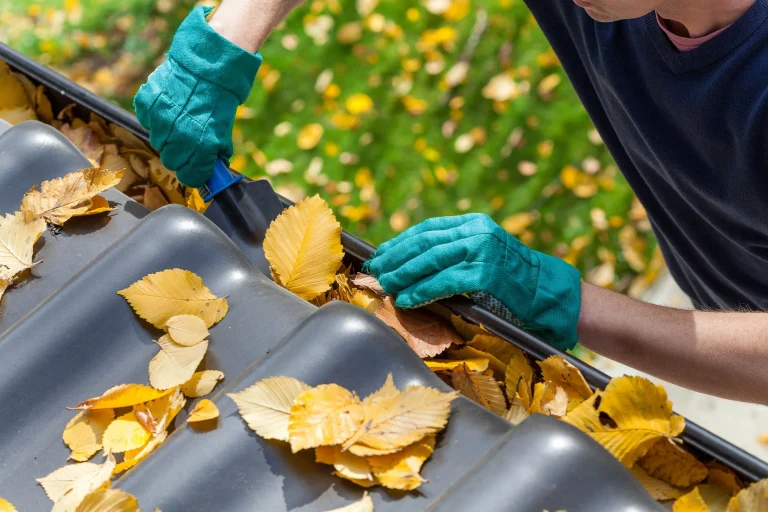
- Autumn: Clear leaves and organic matter from stone surfaces to prevent tannin staining; ensure all surface drains are clear before winter rains.
- Winter: Avoid using harsh de-icing salts on concrete pavers; use sand for traction to prevent chemical pitting of the surface.
Preserving Quality Through Adaptation
A “Dynamic Adaptation” strategy involves being willing to change parts of the hardscape as the landscape matures. If a nearby tree’s roots begin to lift a section of a path, the professional approach is not to cut the roots (which may kill the tree) but to re-set that section of the path using a “bridge” technique or by curving the path around the root flare. This preserves the health of the overall ecosystem while maintaining the functionality of the hardscape.
Measurement, Kpis, And Evaluation
Success in hardscaping is measured through both leading and lagging indicators. A leading indicator is the “Percolation Rate” of the sub-base during construction—if water doesn’t drain away within minutes of being poured onto the gravel, the project is headed for failure. A lagging indicator is the absence of standing water on the patio surface 24 hours after a major rain event.
For a professional to prove success to a stakeholder, they must document the “invisible” work. Photos of the excavation depth, the compaction passes, and the drainage pipe installation are far more valuable for proving quality than the final “beauty shot.” These records serve as an “audit trail” that can be referenced if any issues arise years later.
Qualitative Indicators Of Success
Beyond the technical specs, hardscaping design ideas must be evaluated on human metrics. Does the space feel “right” in terms of scale? Do people naturally gravitate to the seating areas? If a large patio remains empty while people crowd onto a small porch, the “Hardscape KPI” for spatial logic has failed. Successful hardscaping facilitates human connection without being noticed.
Documentation And Reporting Examples
A professional project report might include: “Post-Installation Pitch Report: 1.5% slope achieved consistently across 800 sq ft surface, directing water toward the bioswale.” Or: “Compaction Log: 4 passes with 5,000-lb centrifugal force plate compactor on 6-inch lift of 21A stone.” This level of documentation provides peace of mind and justifies the premium cost of professional labor.
Common Misconceptions And Realities
The world of exterior design is filled with myths that often lead to poor decision-making. One of the most persistent myths is that hardscaping is “maintenance-free.” While it requires less care than a lawn, every hardscape needs cleaning, joint refilling, and occasional sealing. Believing it is maintenance-free leads to neglect, which significantly shortens the lifespan of the installation.
Another common misconception is that “thicker pavers are always better.” While thickness matters for driveways, a 2-inch paver on a perfectly compacted 8-inch base will outperform a 4-inch paver on a 2-inch base every time. The base is the engine of the hardscape; the paver is just the paint job. Focusing on the surface rather than the foundation is a classic amateur mistake.
Myth: Diy Hardscaping Is A Simple Weekend Project
The reality is that a standard 15×15 patio requires moving approximately 10 to 15 tons of material. This is a massive physical undertaking that requires specialized knowledge of soil mechanics. Most DIY projects fail not because of lack of effort, but because of a lack of understanding of “slope and pitch,” leading to water damage to the home’s foundation.
Myth: All Stone Is Essentially The Same
In reality, the geological origin of stone dictates its performance. Sedimentary stones like limestone are beautiful but porous and can be susceptible to staining and acid rain. Igneous stones like granite are nearly indestructible but much harder to cut and shape. Choosing the wrong stone for a specific climate (e.g., using a high-absorption sandstone in a freeze-thaw zone) is a recipe for surface spalling and disintegration.
Ethical, Contextual, And Practical Limits
Hardscaping design ideas are not universally applicable; they must be constrained by the ethical and environmental context of the site. A “Gray Area” in modern design is the use of high-heat-absorbent materials in urban environments. Adding 1,000 square feet of dark slate to a small city lot can raise the local ambient temperature by several degrees, contributing to the “urban heat island” effect.
There are also practical limits to what hardscaping can achieve. It should not be used as a “brute force” solution for major drainage problems that should be handled by municipal infrastructure. Trying to pave over a swampy area will only lead to a sinking patio. In such cases, the “ethical design” choice is to use a raised wooden boardwalk or a pier-supported deck rather than a traditional stone patio.
When To Walk Away From An Approach
A professional should avoid hardscaping design ideas that require the removal of significant “old growth” tree roots or the blocking of natural wildlife corridors. If a design requires a retaining wall that will divert water onto a neighbor’s property, it is both an ethical and a legal failure. The current era demands “good neighbor” landscaping that considers the watershed as a whole.
The Constraint Of Modern Labor
The availability of skilled masons is a practical constraint that must be factored into any design. Intricate, hand-cut stone patterns may be beautiful on paper, but if there are no local craftsmen capable of executing the work, the design will suffer. Sometimes, the most “sophisticated” choice is a simpler design that can be executed perfectly with the available local workforce.
Logic Synthesis And Final Judgment
The most successful hardscaping design ideas are those that strike a perfect balance between engineering rigor and artistic intuition. We must move beyond seeing the “patio” or the “wall” as an isolated object and instead see it as a node in a complex system of light, water, and human movement. The goal is to create a structure that feels as though it was always meant to be there, rising naturally from the topography.
True mastery of the exterior environment requires a “Systemic Process” where every decision is checked against its second-order consequences. By prioritizing drainage, compaction, and material longevity over temporary trends, we create outdoor spaces that age gracefully. In the end, the quality of a hardscape is not judged by how it looks on the day of completion, but by how it looks and functions twenty years later.
Designing for the long term requires the courage to invest in what is hidden beneath the surface. It is the silent, underground work that supports the beauty above, proving that in the realm of the exterior, the foundation is the ultimate expression of craft.
Frequently Asked Questions
What Is The Most Durable Material For Hardscaping Design Ideas?
Natural stones like granite and quartzite are generally considered the most durable due to their high density and low water absorption rates. However, engineered interlocking concrete pavers are also highly durable and offer superior flexibility in freeze-thaw climates because they can shift slightly without cracking.
How Do I Prevent Weeds From Growing In My Patio Joints?
The most effective method is using high-quality polymeric sand, which hardens when activated with water to create a semi-rigid barrier. This sand resists erosion and prevents weed seeds from taking root, provided the sub-base was properly cleared of organic material during installation.
Does Hardscaping Increase Property Value?
Generally, yes. Well-designed hardscaping is considered a “permanent improvement” and can offer a significant return on investment by increasing the usable square footage of the home. Professional masonry and structured outdoor living areas are highly attractive to buyers who value low-maintenance outdoor spaces.
How Much Slope Should A Patio Have For Drainage?
A standard professional pitch is 1/8 to 1/4 inch of drop for every foot of distance away from the home. This ensures that rainwater moves away from the foundation quickly enough to prevent pooling but remains subtle enough that it is not noticeably “slanted” to someone sitting on the patio.
Can I Install Hardscaping Over An Existing Concrete Slab?
It is possible to “overlay” stone or thin pavers on a slab, but only if the concrete is in excellent structural condition without major cracks. If the underlying slab shifts or settles, any material glued or set on top of it will also crack or displace, making it a high-risk approach.