How To Plan A Landscape Lighting Project On A Budget
How to plan a landscape lighting project on a budget requires a strategic understanding of both electrical fundamentals and aesthetic design principles. Achieving a professional exterior look without excessive expenditure involves meticulous prioritization of safety, longevity, and visual impact. By focusing on high-value areas and utilizing cost-effective materials, property owners can transform outdoor spaces effectively. This guide examines the technical nuances and practical steps necessary to execute a successful lighting installation while maintaining strict fiscal discipline.
The complexity of exterior lighting often surprises those new to the field. It involves navigating voltage drop, weatherproofing, and the physics of light distribution. Professionals approach these projects by analyzing the structural layout of a property before a single fixture is purchased. This analytical mindset ensures that every component serves a specific purpose, reducing waste and preventing common installation errors. Furthermore, understanding the interplay between shadows and light can create depth without requiring a high density of fixtures.
Current trends emphasize sustainability and energy efficiency, making low-voltage LED systems the industry standard. These systems offer significantly lower operational costs compared to traditional halogen setups. Moreover, the modular nature of modern lighting allows for incremental upgrades. A well-constructed plan permits the installation of a robust backbone—such as the transformer and main wire runs—even if the initial fixture count is limited by current financial constraints.
How To Plan A Landscape Lighting Project On A Budget
The core essence of learning how to plan a landscape lighting project on a budget lies in the concept of “layering” rather than “flooding.” Much like an artist uses a limited palette to create a masterpiece, a budget-conscious planner uses light sparingly to highlight essential architectural and natural features. This approach prevents the “airport runway” effect where too many lights wash out the landscape. Instead, it creates focal points that guide the eye naturally through the outdoor environment.
Professionals interpret budget planning as the optimization of the “Total Cost of Ownership” (TCO). While a cheap plastic fixture might save money today, its inevitable failure in extreme weather creates a recurring expense. A professional interpretation focuses on spending more on “infrastructure” components—like high-quality wire and transformers—while choosing mid-range fixtures that can be easily replaced or upgraded later. This ensures the foundation of the system remains intact for decades.
Misunderstandings often occur when laypeople equate “budget” with “low quality.” In the world of exterior lighting, a budget project simply means a project with a focused scope. It is entirely possible to have a high-end, professional-grade lighting system on a small property if the design is intentional. By focusing on high-traffic areas and primary security points, a planner can achieve maximum utility with minimal hardware. This disciplined approach distinguishes an amateur “quick fix” from a professional-grade installation.
The Concept Of Visual Prioritization
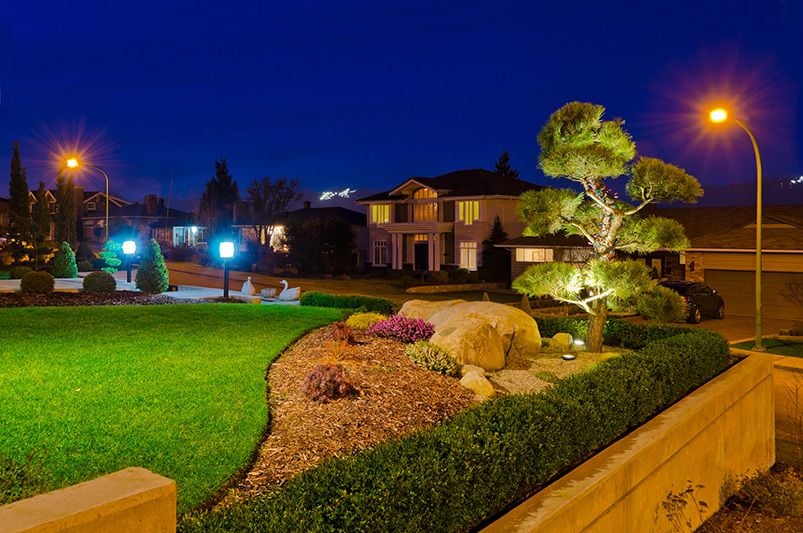
Visual prioritization is the act of deciding which elements of the landscape deserve illumination. This usually includes primary walkways for safety, architectural pillars for height, and specific trees for texture. By ignoring secondary or tertiary elements, the project remains affordable. This selective lighting creates a sophisticated “chiaroscuro” effect, where the contrast between light and dark adds drama and depth to the property at night.
Standard Professional Interpretations
In professional circles, budget planning involves the use of “multi-tap” transformers and oversized wire gauges. These choices might seem more expensive initially, but they allow the system to operate at peak efficiency. Higher efficiency means lower electricity bills and less strain on the LED drivers. Professionals also advocate for “zone control,” which allows different parts of the yard to be illuminated only when necessary, further reducing long-term operational costs.
Historical Evolution And Industry Shifts
The methods used in exterior lighting have undergone a radical transformation over the last few decades. Historically, “line voltage” systems (120V) were common, requiring deep trenching and expensive conduit to meet safety codes. These systems were costly to install and even more expensive to operate, often deterring homeowners from large-scale projects. The shift toward “low voltage” (12V or 24V) revolutionized the accessibility of landscape lighting for the average consumer.
Traditional incandescent and halogen bulbs dominated the market until the mid-2000s. These bulbs had high energy consumption and short lifespans, frequently burning out within 2,000 hours. The advent of high-output LEDs changed the landscape entirely. Modern LEDs can last 30,000 to 50,000 hours while using approximately 80 percent less energy. This technological leap significantly lowered the barrier to entry for budget-conscious projects, as smaller, cheaper transformers could now power more lights.
From Functional To Ornamental Lighting
Old standards of outdoor lighting were purely functional, focused solely on visibility and security. These “floodlight” systems were often harsh and aesthetically unpleasing. Today, the focus has shifted toward “ornamental” lighting, which treats the landscape as a three-dimensional canvas. This shift has allowed for more creative, budget-friendly solutions, such as moonlighting and shadowing, which use fewer fixtures to cover larger visual areas effectively.
Outdated Assumptions In Modern Planning
One persistent assumption is that solar-powered lights are a viable long-term solution for budget projects. While solar technology has improved, these units often lack the consistency and brightness required for professional-grade results. Relying on integrated solar fixtures often leads to “maintenance fatigue,” where the owner must replace the entire unit when the battery or sensor fails. Modern low-voltage systems remain the standard for durability and reliability in budget-conscious professional planning.
Conceptual Frameworks And Strategic Foundations
When considering how to plan a landscape lighting project on a budget, it is helpful to use the “Triangle of Utility.” This framework balances three competing needs: safety (navigation), security (deterrence), and aesthetics (beauty). A successful budget plan allocates resources to safety first, security second, and aesthetics third. This ensures that the system is practical before it is decorative, preventing the need for costly redesigns later.
Another useful mental model is the “Zone of Impact.” This involves dividing the property into three zones: the foreground (walkways), mid-ground (shrubs and features), and background (perimeter trees). For a budget project, focus almost entirely on the foreground and mid-ground. This creates a sense of enclosure and safety without the expense of lighting the entire property line. This framework helps professionals avoid “scope creep,” where the project grows beyond its intended financial boundaries.
The Incremental Expansion Strategy
The “incremental expansion” model is a professional favorite for budget constraints. In this framework, the planner installs a transformer and wiring capacity designed for 20 lights but only installs five fixtures initially. This “over-engineered” backbone allows for future growth without the need to dig new trenches or replace the power source. It treats the lighting system as a living infrastructure rather than a static purchase.
The Rule Of Three Points
The “Rule of Three Points” suggests that any significant feature (like a large oak tree) only needs three points of light to look complete. In a budget context, this can be reduced to one or two points if the angles are chosen correctly. This framework teaches planners to maximize the “throw” of each light. By understanding beam angles, one can illuminate a large surface area with a single wide-angle wash light rather than multiple narrow-spot lights.
Key Types And Approaches To Exterior Lighting
There are several distinct approaches to landscape lighting, each with its own cost profile and visual outcome. Path lighting is the most common, involving small fixtures placed along walkways to guide foot traffic. Uplighting involves placing fixtures at the base of trees or walls to project light upward, emphasizing height and texture. Silhouetting and shadowing are more advanced techniques that use the placement of fixtures relative to objects to create dramatic effects.
Choosing the right approach depends on the existing landscape and the primary goal of the project. For instance, “grazing” is an excellent technique for textured stone walls, as it brings out the shadows in the masonry. However, grazing requires fixtures to be placed very close to the wall, which might be difficult on a budget if the area is already paved. In such cases, “wall washing” from a distance might be more cost-effective as it requires less precise placement.
| Variation | Target Audience | Core Advantage | Trade-offs | Relative Complexity |
|---|---|---|---|---|
| Path Lighting | Homeowners | Immediate safety and curb appeal. | High fixture count can be expensive. | Low |
| Uplighting | Enthusiasts | Dramatic architectural highlights. | Light pollution if not aimed correctly. | Medium |
| Moonlighting | Professionals | Natural, soft evening glow. | Requires climbing trees/ladder work. | High |
| Wall Washing | Budget-Conscious | Covers large areas with few fixtures. | Less detail in texture highlights. | Medium |
When selecting a path, the “Decision Logic” should be based on the property’s natural assets. If you have large trees, moonlighting or uplighting will yield the highest visual ROI. If your property is mostly flat with intricate gardens, path lighting and small spotlights are more appropriate. Always prioritize the “structural” elements of the yard first, as these provide the most dramatic transformation for the least amount of hardware.
Real-world Scenarios And Applied Logic
Consider a scenario where a homeowner has a long driveway but a very limited budget. The instinct might be to buy ten cheap plastic solar lights. However, the professional approach would be to install two high-quality low-voltage pillars at the entrance. These two lights provide a clear “destination marker” and improve security far more effectively than ten dim, flickering solar units. This is the essence of making strategic choices in the planning phase.
In another scenario, a professional might be tasked with lighting a backyard for a client who enjoys hosting evening gatherings. Instead of lighting every individual plant, the designer might choose to “wash” a single large perimeter fence and “uplight” one central ornamental tree. This creates a reflected glow that provides ambient light for the entire patio. By using the fence as a giant reflector, the designer achieves soft, functional light with minimal equipment.
Scenario: The Small Urban Courtyard
Small spaces present a unique challenge where light can easily become overwhelming. In an urban courtyard, “grazing” a brick wall or using “shadowing” against a fence can create the illusion of a larger space. Because the footprint is small, the wire runs are short, which allows for the use of thinner gauge wire, saving on material costs. The focus here is on “micro-details” rather than broad strokes.
Second-order Consequences Of Design Choices
Every lighting decision has a ripple effect. Choosing “cool white” LEDs (5000K) might seem “brighter,” but it often creates a clinical, harsh environment that neighbors might find intrusive. Choosing “warm white” (2700K) is generally more pleasant but may require slightly higher lumen counts to achieve the same perceived brightness. These second-order consequences impact the “vibe” of the home and the long-term satisfaction of the owner.
Planning, Cost, And Resource Dynamics
Developing a budget for landscape lighting requires distinguishing between “direct costs” and “hidden costs.” Direct costs include fixtures, wire, and the transformer. Hidden costs include the tools needed for trenching, connectors (which often fail if they are cheap), and the electricity used over time. In landscape lighting, “cheap” often leads to “expensive” because of the harsh nature of the outdoor environment, where moisture and soil acidity can corrode inferior materials quickly.
Resource dynamics also include your “time budget.” A DIY installation saves on labor costs but requires a significant investment in learning and physical work. If a professional is hired, the labor will likely match or exceed the cost of the materials. Therefore, how to plan a landscape lighting project on a budget often hinges on finding the “sweet spot” where you purchase high-quality components but perform the labor yourself, or vice-versa.
| Category | Entry-Level Scenario | Professional Standard | Enterprise/High-End | Key Nuance |
|---|---|---|---|---|
| Fixtures | Composite/Plastic | Aluminum/Die-Cast | Solid Brass/Copper | Brass patinas and lasts 25+ years. |
| Power Supply | Basic Plug-in Timer | Stainless Multi-Tap | Smart/WiFi Integrated | Multi-tap handles voltage drop better. |
| Wiring | 16-Gauge DIY | 12-Gauge Direct Burial | 10-Gauge Heavy Duty | Thicker wire allows for longer runs. |
| Connectors | Pierce-type (included) | Heat-Shrink/Grease-Filled | Mechanical Junction Box | Connections are the #1 failure point. |
Focusing on the “Key Nuance” column is essential for budget projects. For example, if you choose aluminum fixtures to save money over brass, you must be prepared to touch up the paint every few years to prevent oxidation. Conversely, spending more on grease-filled connectors is a non-negotiable “budget” move because it prevents you from having to dig up and repair the entire system when the lights stop working due to corrosion in six months.
The Professional Toolkit And Integrated Ecosystems
To successfully execute a plan, one must understand the “Real Problem” each tool in the kit solves. A digital multimeter is not just a gadget; it is the only way to diagnose “voltage drop.” This occurs when the electrical resistance in the wire causes the lights at the end of the run to appear dimmer than those at the start. Understanding this allows a planner to choose the correct wire gauge, ensuring the system looks professional and uniform.
Another essential part of the ecosystem is the “hub” wiring method. Instead of “daisy-chaining” lights one after the other, a hub system brings groups of lights to a central junction point. This integrates into a larger system more effectively and makes troubleshooting much easier. If one light goes out, you know exactly where the connection point is. While this requires more wire, it saves immense amounts of time and frustration during future maintenance.
Hidden Limitations Of Modern Gear
Smart lighting controllers are popular but come with hidden limitations. Many “budget” smart transformers rely on a home’s WiFi signal, which is often weak in the far corners of a yard. Without a strong signal, the lights may not turn on or off as scheduled. Professionals mitigate this by using hard-wired timers or photocells, which are more reliable and often cheaper than high-tech smart solutions that require expensive range extenders.
The Role Of Voltage Regulators
Some high-end LED fixtures include internal voltage regulators that allow them to accept a wide range of power (e.g., 9V to 15V). For a budget project, these fixtures can be a lifesaver. They allow for longer wire runs and less precise electrical calculations, as the fixture itself corrects for any minor voltage drop. This “forgiveness” in the hardware can offset the lack of expensive, heavy-duty wiring in some planning scenarios.
Risk Landscape And Failure Modes
The risk landscape of exterior lighting is dominated by “water ingress.” This is the primary failure mode for outdoor electronics. Small errors in sealing a fixture or a connection compound into systemic failures over time. Moisture enters through capillary action, traveling up the wire and into the light socket or the transformer. This can cause short circuits that trip breakers or permanently damage expensive LED drivers.
Another significant risk is “operational leak,” where the system consumes more power than intended due to poor design or faulty components. This is often a result of using non-LED bulbs or failing to account for the “VA” (Volt-Amps) of a transformer. In a budget project, these small inefficiencies can add up to hundreds of dollars in wasted electricity over the life of the system. This “financial leak” undermines the initial savings achieved during the planning phase.
Human Errors In Installation
The most common human error in landscape lighting is improper trenching depth. While low-voltage wire only needs to be buried a few inches deep, failing to protect it in high-traffic areas leads to “shovel blight.” This occurs when gardening tools accidentally sever the wire. A practical mitigation is to run wire through inexpensive PVC conduit in areas where digging is likely to occur, such as flower beds or near the edges of lawns.
Systemic Failure Via Overloading
Overloading the transformer is a structural risk that can lead to overheating and fire hazards. This happens when a homeowner keeps adding “just one more light” without checking the total wattage capacity. Professional planning includes a “20 percent buffer” rule, where the total load never exceeds 80 percent of the transformer’s rated capacity. This provides a safety net for power surges and extends the life of the electrical components.
Governance, Maintenance, And Sustainability
Static systems often fail because they do not account for growth. A landscape is a living thing; trees grow, shrubs widen, and groundcover spreads. A lighting system that looks perfect today will be obscured by foliage in two years. This necessitates “Dynamic Adaptation,” where fixtures are moved or re-aimed periodically to maintain their intended effect. This is why learning how to plan a landscape lighting project on a budget includes planning for the time it takes to maintain it.
Sustainability in lighting also refers to “Light Pollution” management. Over-lighting a property disrupts local ecosystems and can bother neighbors. Using “shields” or “shrouds” on fixtures ensures that light is directed only where it is needed—on the ground or the feature—and not into the sky or the street. This responsible governance of light is a hallmark of professional design and costs nothing but a few minutes of careful aiming during setup.
- Clean all fixture lenses quarterly to remove mineral deposits and dirt.
- Check for “wire creep” where frost heave or erosion has exposed buried cables.
- Trim back foliage that has grown over the light path of spotlights.
- Inspect all connection points for signs of corrosion or moisture entry.
- Update timer settings bi-annually to account for seasonal changes in daylight.
- Re-aim fixtures that may have been bumped by lawn mowers or pets.
Focusing on these long-term mastery tasks ensures that the “budget” project does not become a “wasteful” project. A small amount of preventative care preserves the quality and relevance of the lighting for decades. This proactive approach is far more cost-effective than waiting for the system to fail and then attempting to diagnose multiple systemic issues simultaneously.
Measurement, Kpis, And Evaluation
How does one measure the success of a landscape lighting project? For a layperson, the “Leading Indicator” is the immediate visual “wow” factor when the sun goes down. For a professional, the leading indicators are technical: voltage readings at the furthest fixture and total amperage draw at the transformer. If these numbers are within the safe operating range, the project is technically sound, regardless of how it looks.
Lagging indicators include the longevity of the bulbs and the stability of the energy bill over six months. If bulbs are burning out prematurely, it is a signal of “over-voltage,” where the transformer is sending too much power to the LEDs. Successful projects demonstrate a consistency in performance across different weather conditions and seasons. A professional proves success to a stakeholder by documenting these readings and showing a clear “before and after” impact on property utility.
Documentation For Long-term Success
Professional documentation often includes a “wire map.” This is a simple sketch showing where the wires are buried and where the junction points are located. For a budget project, this is invaluable. If a wire is ever cut or a light fails, the owner does not have to dig up the entire yard to find the problem. This “as-built” record is a critical piece of the project’s long-term value and should be kept with the home’s permanent records.
The User Experience Metric
Beyond the technical, the ultimate KPI is the “User Experience” (UX). This can be evaluated by walking the property at night and asking: Are there dark spots that feel unsafe? Is there any glare that blinds someone walking toward the house? Does the lighting guide the eye to the front door? If the lighting achieves these functional goals without being distracting, the design is a success, regardless of the total dollar amount spent.
Common Misconceptions And Truths
A prevalent myth is that “solar lights are just as good as wired lights.” In reality, solar lights are often “disposable” items that lack the lumen output for serious safety or architectural highlighting. While they have a place in very small, temporary applications, they rarely form the basis of a high-quality landscape plan. The true cost of solar is often higher due to the frequent replacement cycles and the lack of reliable performance in winter or cloudy weather.
Another misconception is that “higher wattage equals better light.” With LED technology, wattage is only a measure of power consumption, not brightness. “Lumens” is the correct metric for brightness, and “Kelvin” is the metric for color temperature. A 5-watt LED can often produce more usable light than a 50-watt halogen if the optics are designed correctly. Understanding this distinction is key to keeping a project within a tight budget while still achieving a bright, clear look.
The Myth Of “maintenance-free” Systems
Many homeowners believe that once the lights are in the ground, they never have to think about them again. No outdoor system is truly maintenance-free. Ants can nest in warm transformers, moisture can find its way into “sealed” units, and the ground will always shift. Learning how to plan a landscape lighting project on a budget means acknowledging these realities and setting aside a small amount of time—and a few dollars—each year for basic upkeep.
More Lights Do Not Mean More Beauty
There is a common belief that every tree and every section of the house must be lit. This “over-lighting” actually flattens the landscape and makes it look like a commercial parking lot. True beauty in landscape design comes from the “interplay of shadow.” By leaving some areas dark, you create a sense of mystery and highlight the areas that are lit. A budget project that uses five lights strategically will always look better than a project that uses twenty lights haphazardly.
Ethical, Contextual, And Practical Limits
Every lighting project exists within a broader context, including the surrounding community and the local environment. “Dark Sky” compliance is an ethical consideration that aims to reduce light pollution. This involves using fixtures that direct light strictly downward and using warmer color temperatures that are less disruptive to nocturnal wildlife. While these constraints might seem like a burden, they often lead to more focused and professional-looking designs that fit naturally into the neighborhood.
There are also practical limits to what can be achieved on a budget. If a property has significant elevation changes or rocky soil, the cost of labor and specialized fixtures will naturally rise. In some cases, the “right” decision is to wait and save more money rather than installing an inferior system that will need to be replaced. Recognizing the boundaries of your current era—including material costs and local electrical codes—is a sign of a mature and professional planning process.
When To Decline A Project Path
There are moments when a specific lighting approach should be avoided. For instance, if you cannot afford high-quality waterproof connectors, it is better to delay the project than to use “wire nuts” and electrical tape. These temporary fixes will almost certainly fail, potentially causing a transformer fire or damaging your home’s exterior outlets. Knowing when “good enough” is actually “dangerous” is the ultimate test of a project planner’s judgment.
Contextual Constraints Of Architecture
The style of the home also dictates the lighting limits. A modern, minimalist home looks best with clean, hidden light sources and sharp angles. A rustic, traditional home might benefit from visible, ornate fixtures like lanterns. Forcing a specific style because the fixtures were “on sale” is a common budget mistake. The lighting should always complement the architecture, not fight against it. This contextual awareness ensures the project adds real value to the property.
Conclusion: The Synthesis Of Judgment And System
Successfully navigating how to plan a landscape lighting project on a budget is a testament to the power of deliberate design over brute-force spending. It requires a synthesis of electrical knowledge, artistic vision, and long-term maintenance planning. By prioritizing high-impact areas and investing in a solid infrastructure, property owners can create an outdoor environment that is both beautiful and resilient. The most successful projects are those where the constraints of the budget were used as a catalyst for creative, efficient solutions.
Ultimately, the difference between a mediocre and a flagship exterior lighting project lies in the details. It is found in the choice of a warm color temperature, the strategic placement of a single spotlight, and the commitment to using proper waterproof connections. These small, low-cost decisions aggregate into a system that performs reliably for years. As technology continues to evolve, the principles of layering, prioritizing, and maintaining remain the bedrock of professional-grade landscape illumination.
The journey from a dark yard to a masterfully lit landscape is one of careful observation and incremental progress. By treating the project as a living system rather than a one-time purchase, you ensure that it remains relevant as the landscape grows and changes. This approach balances the immediate desire for beauty with the practical reality of financial stewardship. Mastery in this field is not defined by how much you spend, but by how wisely you use every lumen to enhance the world around you.
Frequently Asked Questions
Is It Possible To Install Landscape Lighting Myself To Save Money?
Yes, low-voltage (12V) systems are generally safe for DIY installation as they do not carry the same risk of lethal shock as high-voltage lines. However, you must still follow local electrical codes, ensure your transformer is properly grounded, and use the correct wire gauge to prevent overheating and voltage drop issues across the system.
Which Is Better For A Budget: Solar Or Low-voltage Wired Lighting?
Low-voltage wired lighting is almost always the better long-term investment for a budget project. While solar has a lower upfront cost, the fixtures are prone to frequent failure and offer poor light quality. A wired system provides consistent, professional results and can be expanded over time as your budget allows.
How Many Lights Can I Put On One Transformer?
The number of lights depends on the total wattage of the bulbs and the rating of the transformer. To ensure longevity, follow the “80 percent rule” by not exceeding 80 percent of the transformer’s capacity. For example, a 100-watt transformer should ideally power no more than 80 watts of total LED lighting.
How To Plan A Landscape Lighting Project On A Budget Without It Looking Cheap?
The secret is “less is more.” Focus your budget on 5-7 high-quality metal fixtures rather than 20 cheap plastic ones. Use “uplighting” on a few key trees and “path lighting” on main walkways. Strategic placement and the use of warm (2700K) light will create a high-end look regardless of the total fixture count.
What Is The Most Common Reason Budget Lighting Systems Fail?
The most common cause of failure is poor wire connections. Inexpensive “pierce-type” connectors that come with many budget kits often allow moisture to enter, leading to corrosion and system failure within months. Investing in heat-shrink or grease-filled connectors is the best way to ensure your budget project lasts for years.