Vertical Garden Ideas: A Professional External Design Guide
Vertical garden ideas represent a transformative shift in how professionals and enthusiasts perceive space, moving beyond traditional horizontal planting toward the efficient use of vertical planes. This discipline bridges the gap between horticulture and structural engineering, offering a methodology for maximizing biomass in constrained environments. As urban density increases, the ability to cultivate greenery upward rather than outward has become a vital skill for modern landscape designers.
For the beginner, these concepts offer a way to bypass the limitations of a small footprint, such as a balcony or narrow side yard. For the seasoned professional, the vertical landscape is a complex system involving hydraulics, nutrient delivery, and weight distribution. Understanding the nuanced balance of these elements is essential for creating long-term, sustainable green installations that thrive in exterior conditions.
The current trend toward biophilic design has accelerated the adoption of these systems across residential and commercial sectors. This evolution is not merely aesthetic; it addresses systemic needs for urban cooling, air filtration, and psychological well-being. By treating the exterior wall as a living skin, designers can create microclimates that benefit both the building occupants and the local ecosystem.
Vertical Garden Ideas
Exploring vertical garden ideas requires a multidimensional perspective on how gravity and biology interact. At its core, a vertical garden is like a skyscraper for vegetation, where the infrastructure must provide support, water, and nutrients to every floor simultaneously. Unlike traditional gardening, where the soil acts as a massive reservoir, vertical systems often rely on thin substrates or hydroponic delivery methods that demand precise management.
Common professional interpretations often focus on the “living wall” vs. “green facade” distinction. A green facade uses climbing plants that root in the ground or in pots at the base, while a true living wall integrates the growing medium directly into the vertical structure. Misunderstandings frequently occur when novices assume a vertical system can be treated with the same “set and forget” mentality as a garden bed; in reality, these systems are dynamic and require proactive monitoring of moisture levels.
The essence of the craft lies in managing the transition from soil-based life to suspended life. This requires a shift in mental models from “digging” to “assembling.” Every element, from the moisture-retentive felt layers to the rigid backing boards, must work in concert to prevent structural damage while fostering vigorous plant growth. Success is measured not just by the initial visual impact, but by the system’s ability to remain healthy through seasonal transitions.
The Physics Of Vertical Growth
Plants in a vertical orientation face unique stressors, particularly regarding water movement. Gravity naturally pulls moisture toward the bottom of the system, often leaving the upper sections prone to desiccation. Professional designs counteract this by using pressure-compensated drip emitters and zoned irrigation schedules that ensure uniform saturation throughout the entire vertical span.
Integration With Built Environments
A vertical garden is rarely an isolated feature; it is an extension of the architectural envelope. When integrating vertical elements into a larger site, professionals often consult Top Backyard Landscaping Plans: Professional Design Guide to ensure spatial harmony between vertical and horizontal zones. This integration ensures that the irrigation runoff and structural loads are factored into the overall site plan from the beginning.
Historical Evolution And Industry Shifts
The lineage of vertical gardening stretches back to the ancient Hanging Gardens of Babylon, yet the modern standard was codified by botanists like Patrick Blanc in the late 20th century. Traditionally, “old ways” of verticality were limited to simple trellises and ivy-covered walls. While effective, these methods were often slow to establish and offered limited botanical diversity.
Modern standards have shifted toward modular, hydroponic, and soil-less systems that allow for instantaneous “plug-and-play” installation. This shift was driven by advancements in geotextiles and plastic fabrication, which provided lightweight alternatives to heavy soil. The persistence of certain outdated assumptions, such as the idea that vertical gardens must use heavy potting soil, often leads to structural failures in DIY projects.
Industry veterans now prioritize “active” systems over “passive” ones. An active system integrates sensors and automated fertigation, allowing the garden to respond to environmental changes in real-time. This evolution reflects a move toward precision agriculture on a micro-scale, where every liter of water and gram of nutrient is accounted for to maximize efficiency.
Conceptual Frameworks And Mental Models
To master the implementation of vertical garden ideas, one must adopt specific heuristic frameworks that govern decision-making. These models help both laypeople and professionals navigate the complexity of living architecture without becoming overwhelmed by the technical details.
The Hydro-synergy Model
This framework treats water not just as a resource, but as a structural component. For the layperson, it helps visualize how water moves through the system as a continuous cycle rather than a one-way path. For the professional, it prevents errors in irrigation design by emphasizing the relationship between evaporation rates, drainage speed, and capillary action within the substrate.
The Ecological Niche Stratification
In a vertical plane, different heights experience different environmental conditions. The top of a wall may be exposed to high wind and intense sun, while the bottom remains shaded and humid. This model encourages designers to select plants based on these micro-zones. It prevents the common error of “uniform planting,” where the same species is used across the entire wall regardless of exposure levels.
The Structural Integrity Lifecycle
This model focuses on the long-term interaction between the garden and the wall it inhabits. It prompts the designer to consider how root systems, moisture, and weight will change as the plants mature. By thinking in terms of a 10-year lifecycle, professionals can avoid the “initial beauty, long-term disaster” trap that plagues poorly planned installations.
Key Types And Taxonomy Of Vertical Systems
Categorizing vertical garden ideas involves understanding the mechanical and biological differences between various delivery methods. The choice of system depends on the available budget, the desired plant variety, and the structural capacity of the host wall. Below is a taxonomy of the most prevalent systems used in contemporary exterior design.
| Variation | Target Audience | Core Advantage | Trade-offs | Relative Complexity |
|---|---|---|---|---|
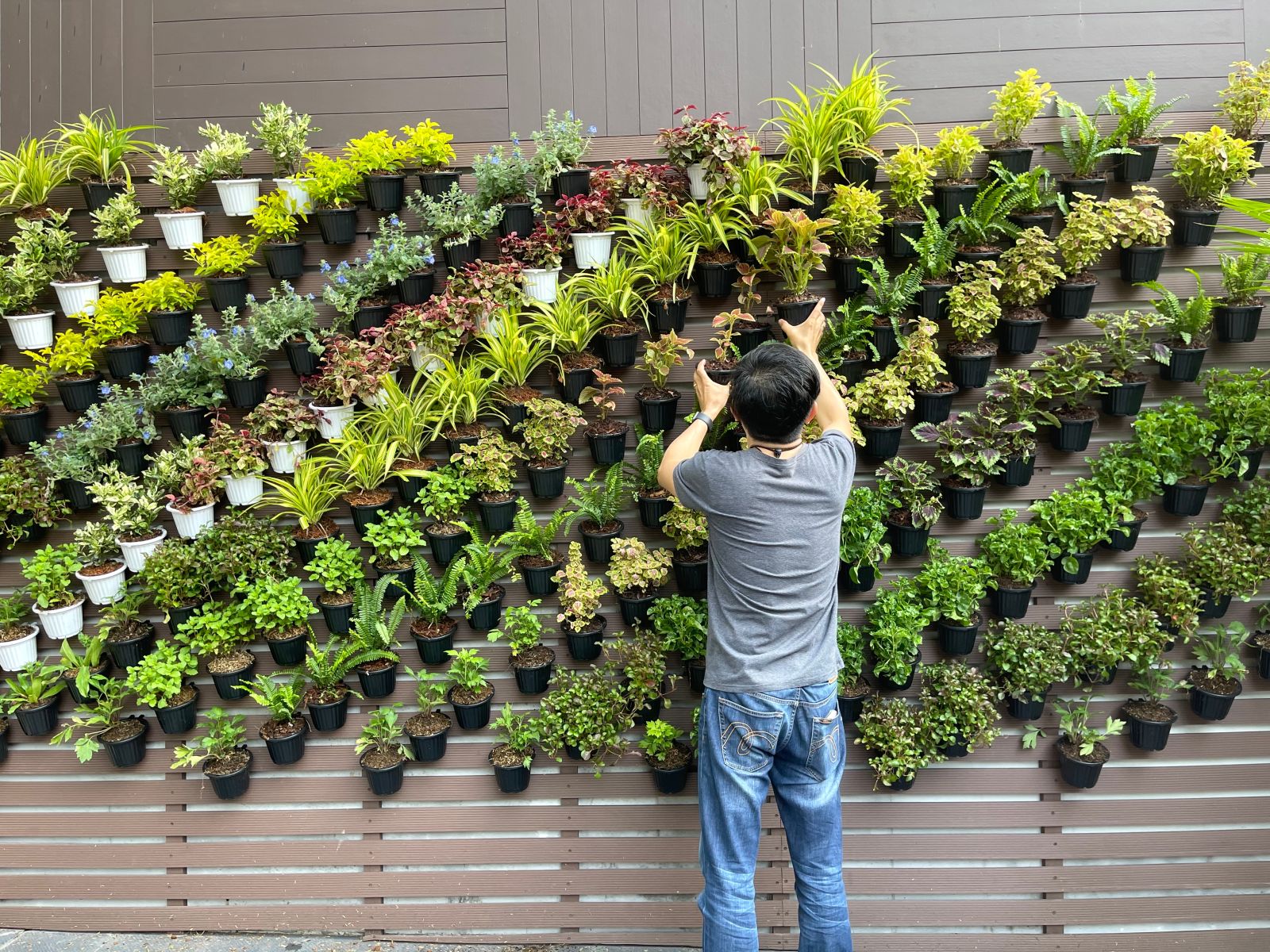
| Pocket-Based Felt | DIY Enthusiasts | Lightweight and easy to install | High evaporation rates, requires frequent watering | Low |
| Modular Tray Systems | Residential Professionals | Instant coverage and easy plant replacement | Higher initial cost, heavier than felt | Moderate |
| Green Facade (Trellis) | Commercial/Architectural | Low maintenance and cost-effective | Takes years to fully establish | Low to Moderate |
| Hydroponic Panels | Industrial/Expert | High plant density and growth rates | Zero margin for error with irrigation | High |
| Freestanding Towers | Urban Farmers | High yield in small footprint | Can be unstable in high winds | Moderate |
Decision logic dictates that if weight is the primary constraint, a felt or hydroponic system is preferred. Conversely, if long-term maintenance costs are the primary concern, a green facade using climbing plants and stainless steel cables is often the superior choice. One must assess the “failure tolerance” of the site; a hydroponic wall in a remote location without an automated backup system is a high-risk endeavor.
Real-world Scenarios And Applied Logic
Understanding vertical garden ideas in practice requires looking at specific situational constraints. Each scenario demands a different logical approach to ensure the garden survives and thrives in its specific environment. The second-order consequences of these choices often determine the project’s ultimate success.
The Shaded Narrow Passageway
In narrow exterior alleys, light is the limiting factor. The logical choice here is a modular system utilizing shade-tolerant ferns and hostas. The second-order consequence of this choice is increased humidity in the passageway, which may require improved ventilation or moisture-resistant wall coatings to prevent mold growth on the building exterior.
The Coastal Exposure Facade
Coastal environments present high salt spray and wind. A green facade using salt-tolerant vines like Trachelospermum jasminoides on a robust cable system is the most resilient approach. For properties with existing stonework, it is beneficial to Compare Patio Installation: Cost, Materials, And Methods to understand how a vertical wall will interface with ground-level drainage and footing requirements.
The Arid Climate Solution
In desert or high-heat areas, water conservation is paramount. A modular tray system with internal reservoirs and thick succulent plantings minimizes water loss. The logic here focuses on thermal mass; the garden acts as an insulating layer, reducing the heat transfer into the building, which in turn lowers cooling costs during peak summer months.
The Corporate Entryway Feature
High-visibility areas require a “polished” look year-round. An hydroponic panel system with pre-grown nursery stock provides immediate aesthetic impact. However, the consequence is a requirement for a professional maintenance contract to handle the chemical balancing of the nutrient solution and regular pruning to maintain the design’s geometry.
Planning, Cost, And Resource Dynamics
Budgeting for vertical garden ideas involves more than just the purchase price of plants and hardware. Direct costs are easily calculated, but hidden costs, such as structural reinforcement, waterproofing, and specialized labor, often inflate the total investment. Ignoring these factors frequently leads to project abandonment or system failure.
| Category | Entry-Level Scenario | Professional Standard | Enterprise/High-End | Key Nuance |
|---|---|---|---|---|
| Hardware | Plastic pockets or PVC pipes | Aluminum frames and HDPE panels | Custom stainless steel/automated kits | Durability correlates with UV resistance |
| Irrigation | Manual hose watering | Automated drip with timer | Web-linked smart fertigation | Complexity reduces human error risk |
| Planting | Seedlings or 4-inch pots | Nursery-grown plugs | Fully mature pre-grown panels | Establishment time affects total cost |
| Maintenance | Owner-performed (weekly) | Quarterly professional service | Bi-weekly managed care contract | Labor is the largest long-term cost |
It is a fundamental industry truth that “cheap” often leads to “expensive” in the vertical gardening world. A low-cost felt system that lacks a proper vapor barrier will eventually cause moisture damage to the wall, resulting in repair costs that far exceed the price of a professional-grade waterproofing system. For those working within strict financial limits, it is better to How To Plan A Garden Renovation On A Budget: Expert Tips to allocate funds toward the core infrastructure while starting with a smaller plant palette.
The Professional Toolkit: Strategies And Ecosystems
Professionals approach vertical garden ideas by selecting tools that solve specific environmental problems. The “Real Problem” isn’t just making plants grow; it is managing the micro-environment within the wall structure. This requires a toolkit that balances biological needs with mechanical reliability.
Substrate Material Science
The choice between mineral wool, coconut coir, or recycled textile felts determines the water-holding capacity of the wall. Professionals must watch out for “compaction” over time. As organic materials break down, they lose their air-filled porosity, which can lead to root rot. Inorganic substrates like rockwool are often preferred in large-scale installations for their stability and predictability.
Precision Irrigation Components
Standard garden emitters often fail in vertical applications because they don’t account for the pressure head created by gravity. Professionals use pressure-compensating (PC) emitters that deliver the exact same amount of water to the top row as the bottom row. The hidden limitation is that these emitters require high-quality filtration systems to prevent clogging from mineral deposits or biological growth.
Remote Monitoring Systems
In the enterprise sector, sensors that measure moisture, pH, and electrical conductivity (EC) are integrated into the garden’s ecosystem. These tools allow for proactive management. However, professionals must be wary of “data overload,” where minor fluctuations trigger unnecessary interventions. The goal is to use data to identify trends rather than reacting to every momentary spike.
Risk Landscape And Failure Modes
Managing the risks associated with vertical garden ideas requires a robust taxonomy of potential failures. These can be categorized into structural, operational, and biological risks. A failure in one area often cascades into others, turning a minor leak into a significant insurance liability.
Structural And Waterproofing Failures
The primary risk is moisture migration into the host building. When mounting green walls to timber supports, homeowners must learn How To Avoid Wood Rot In Decks: Professional Prevention Tips to prevent moisture migration into the structural frame. A lack of an air gap between the garden and the wall is a common design flaw that traps humidity and accelerates decay.
Hydraulic Failure And Desiccation
Because vertical systems have very little “buffer” compared to ground-level soil, a pump failure or a clogged line can kill an entire wall in 48 hours during a heatwave. This is an operational risk. Mitigation involves redundant pumps, battery backups for timers, and moisture sensors that send alerts to a mobile device when levels drop below a critical threshold.
Biological Pathogen Spread
In a vertical system, water often trickles from top to bottom. If a plant at the top becomes infected with a water-borne pathogen, the disease can spread rapidly through the entire system. This risk is mitigated through proper plant quarantine before installation and the use of UV sterilization in recirculating water systems.
Governance, Maintenance, And Sustainability
Static systems in dynamic environments are destined to fail. Masterful vertical gardening requires “Dynamic Adaptation,” where the maintenance routine evolves as the plants grow and the seasons change. Without a governance structure—namely a documentation system—the garden becomes a liability rather than an asset.
Long-term Review Cycle Checklist
- Monthly: Inspect all drip emitters for calcification or blockages.
- Monthly: Check the pH and nutrient levels of the reservoir (if applicable).
- Quarterly: Prune aggressive species to prevent them from shading out slower-growing neighbors.
- Bi-Annually: Inspect structural mounting points for signs of corrosion or loosening.
- Annually: Deep flush the entire system with clean water to remove accumulated salts.
- Annually: Replace any dead or failing plants to maintain visual density.
Sustainability in vertical gardening also touches on the “end-of-life” plan for materials. Using recyclable plastics and biodegradable substrates ensures that the system doesn’t contribute to landfill waste once it reaches the end of its functional life. Documentation of all repairs and plant replacements allows future caretakers to understand the specific “personality” and needs of the installation.
Measurement, Kpis, And Evaluation
Proving the success of vertical garden ideas involves tracking both leading and lagging indicators. Leading indicators are early signals like leaf turgidity and root development in the first month. Lagging indicators are the final results, such as the total biomass achieved after a year or the measurable cooling effect on the building’s facade.
Qualitative Vs. Quantitative Metrics
A professional might use a thermal imaging camera to show a stakeholder how much the green wall has reduced the surface temperature of the building. This is a quantitative KPI. Qualitatively, success is measured by the lack of “brown spots” and the overall aesthetic harmony of the plant patterns. Documentation should include high-resolution photos taken from the same angle every quarter to track growth progress visually.
Reporting Examples For Stakeholders
For a residential project, a simple “Health Scorecard” can be used to report to the homeowner. For commercial projects, reports may include water consumption data, nutrient usage, and a list of biodiversity sightings (e.g., specific pollinators). These reports justify the ongoing maintenance costs by demonstrating the environmental and aesthetic value the garden provides.
Common Misconceptions And Myths
The industry is filled with myths that often lead to project failures or unrealistic expectations. Addressing these misconceptions is a vital part of the professional’s role during the planning phase.
- Myth: Vertical gardens are maintenance-free. Reality: They require more frequent monitoring than traditional gardens due to their low soil volume.
- Myth: You can use any plant on a green wall. Reality: Only certain species can handle the drainage and light conditions of vertical life.
- Myth: Vertical gardens are only for warm climates. Reality: With proper plant selection and winterization, vertical systems can survive in freezing zones.
- Myth: They will attract swarms of mosquitoes. Reality: A properly designed system has no standing water and actually attracts beneficial predators like dragonflies.
- Myth: The roots will grow into my house walls. Reality: Modern systems use physical barriers to prevent root contact with the building structure.
- Myth: Hydroponic systems are “unnatural.” Reality: Hydroponics is simply a different way of delivering natural minerals to a plant’s root system.
These myths persist because people often see beautiful “staged” photos of newly installed walls but rarely see the results of neglected systems two years later. A realistic perspective is the foundation of any successful long-term project.
Ethical, Contextual, And Practical Limits
Every approach to vertical garden ideas has its boundaries. There are times when a vertical garden is simply not the right solution. For example, in areas with extreme high-velocity winds, a felt-based living wall may suffer from “wind burn” or structural stress that makes it unsustainable. In such cases, a more traditional ground-based landscaping approach might be more ethical and practical.
The “gray areas” often involve the trade-off between water usage and aesthetic beauty. In a severe drought, is it ethical to maintain a high-water-consumption green wall? Professionals must weigh these contextual constraints and sometimes recommend dormant-season plants or even transition to xeric (dry-loving) species to remain responsible stewards of the local environment.
Furthermore, the cost of specialized labor can be a constraint. If the local market lacks technicians who understand irrigation electronics, a high-tech system will eventually fail when a minor component breaks. The complexity of the system must match the local capacity for its upkeep.
Logic Synthesis And Conclusion
Successful vertical garden ideas are the result of a disciplined balance between horticultural judgment and systemic process. It is not enough to have a creative vision; that vision must be supported by a technical framework that accounts for gravity, hydraulics, and structural integrity. By treating the vertical plane as a high-performance ecosystem, we can transform neglected surfaces into productive, living assets.
The ultimate mastery of the craft comes from understanding that the system is never truly “finished.” It is a living, breathing entity that requires ongoing observation and minor adjustments. As we continue to refine the tools and techniques of verticality, the boundary between our built environment and the natural world will continue to blur, creating more resilient and beautiful urban landscapes. The future of exterior design lies in our ability to look up and see the potential for life in every vertical square inch.
Frequently Asked Questions
What Are The Best Plants For An Exterior Vertical Garden?
Success depends on light exposure, but common choices include ferns and heucheras for shade, and sedums, grasses, or creeping phlox for sunny areas. Professionals prioritize “clumping” or “trailing” habits over plants that grow strictly upright, as they provide better coverage of the internal hardware.
How Often Do I Need To Water A Vertical Garden?
Most exterior vertical systems require watering once or twice daily during the growing season. Because the substrate volume is small, the system has little water-holding capacity, making automated drip irrigation an essential component for survival rather than a luxury.
Do Vertical Gardens Cause Damp Or Mold On The Wall?
When designed correctly with a waterproof backing and an air gap for ventilation, they do not cause dampness. Problems only arise when DIY installers mount moisture-retentive materials directly against a porous wall surface without a proper vapor barrier or structural separation.
How Do You Handle Vertical Gardens In The Winter?
In cold climates, you must choose hardy species rated for at least two zones colder than your local area, as the roots are more exposed to frost. Additionally, irrigation lines must be blown out or insulated to prevent bursting, and some delicate systems may require temporary covers.
Can I Grow Vegetables In A Vertical Garden?
Yes, leafy greens like kale, lettuce, and herbs thrive in vertical systems. However, “heavy” vegetables like tomatoes or squash require specialized support structures and larger root volumes, making them better suited for deep modular trays or specialized vertical hydroponic towers rather than felt pockets.