Common Roof Shingle Mistakes: A Professional Guide To Repairs
Common roof shingle mistakes often originate from a fundamental misunderstanding of how moisture moves through a building’s envelope. For the homeowner, a roof appears as a static shield against the elements, but for the professional, it is a dynamic system requiring precision and thermal balance. Missteps during installation or selection do not just affect aesthetics; they compromise the structural integrity of the entire residence.
Modern roofing standards have shifted significantly as materials have evolved from simple organic mats to high-performance synthetic composites. These advancements provide greater durability but also leave less margin for error during the application process. Understanding these nuances is essential for ensuring long-term performance and avoiding premature failure in high-stress environments.
This guide examines the technical complexities of shingle application, material dynamics, and environmental considerations. By addressing both the physical installation and the strategic planning behind a roofing project, professionals and property owners can mitigate risks effectively. Navigating these challenges requires a disciplined approach to both craftsmanship and material science.
Common Roof Shingle Mistakes
Identifying common roof shingle mistakes requires looking beyond the surface of the asphalt or composite. At its core, a roofing failure is usually a failure of the water-shedding logic that governs the entire assembly. A useful analogy is to view the roof as a suit of armor; if the plates do not overlap correctly or if the underlying padding is absent, the protection fails despite the quality of the steel.
In professional circles, mistakes are often categorized by whether they are “systemic” or “localized.” Systemic errors involve the general layout, such as choosing the wrong shingle type for a specific slope. Localized errors are usually specific to detail work, such as improper flashing around a chimney or vent pipe. Both can lead to catastrophic leaks if left unaddressed.
Misunderstandings often arise when contractors or DIY enthusiasts apply old-school techniques to modern materials. For instance, the “high-nailing” phenomenon remains a persistent issue where fasteners are placed above the designated seal strip. This error reduces wind resistance and can void manufacturer warranties, yet it remains a frequent occurrence in the field.
The Physics Of Moisture Migration
Roofing is not about making a surface waterproof; it is about making it water-shedding. Water follows the path of least resistance, often defying gravity through capillary action when gaps are present. Common roof shingle mistakes usually involve creating these unintended pathways through poor alignment or inadequate overlap.
Interpretations Of Technical Standards
Building codes provide a baseline, but they are not always sufficient for specific micro-climates. Professionals often disagree on the necessity of “ice and water” shields versus standard felt underlayment. Relying solely on the minimum legal requirement is a strategic error that ignores the unique stressors of local weather patterns.
Historical Shifts In Roofing Standards
The evolution of the roofing industry has moved from labor-intensive natural materials to engineered solutions designed for speed and longevity. In the mid-20th century, organic shingles made of cellulose fibers were the industry standard. These materials were thick and heavy but susceptible to moisture absorption and rot over time.
The transition to fiberglass-reinforced shingles in the late 1970s and 1980s changed the installation requirements. These shingles were lighter and more fire-resistant but required different handling to prevent cracking in cold weather. Many common roof shingle mistakes persist because installers use techniques developed for heavier organic mats on thinner, more flexible fiberglass products.
Modern standards now emphasize the “cool roof” concept and high-velocity wind resistance. As climate patterns shift, the “old ways” of ignoring attic ventilation or using standard staples for fasteners are no longer viable. Today’s high-wind zones require specific 6-nail patterns that were rarely used or required thirty years ago.
From 3-tab To Architectural Mastery
The rise of architectural or “laminated” shingles has added a layer of complexity to installation. Unlike traditional 3-tab shingles, laminated products have a varied profile that can hide improper staggering. This visual camouflage often leads to installers neglecting the precise offset required for optimal drainage and wind resistance.
The Demise Of The Staple Gun
Decades ago, staples were a common fastener for asphalt shingles due to their installation speed. However, industry research proved that staples lack the pull-through resistance necessary for high winds. The shift to pneumatic roofing nails with specific shank lengths is a modern standard that is still sometimes bypassed in budget-focused projects.
Strategic Foundations And Mental Models
Approaching a roofing project requires a mental model that prioritizes the “system” over the “shingle.” The most effective framework is the Barrier-Drainage Model. This perspective assumes that shingles are merely the first line of defense and that the underlayment and flashing must be capable of handling moisture that inevitably bypasses the primary layer.
Another essential framework is the Thermal Equilibrium Model. This focuses on the temperature differential between the attic space and the exterior environment. Common roof shingle mistakes often occur when the installer focuses on the shingles but neglects the ventilation, leading to “cooked” shingles that age prematurely due to trapped heat.
For professionals, the Lifecycle Assessment Model is critical. This involves weighing the upfront cost of premium materials against the long-term expense of maintenance. A cheap installation that requires a full replacement in twelve years is significantly more expensive than a premium installation that lasts thirty, when accounting for inflation and labor costs.
The Water Shedding Logic
Think of shingles as a series of umbrellas held by a crowd. If one person lowers their umbrella or overlaps it incorrectly, the person below gets wet. This logic dictates that every layer must be integrated with the one below it, from the drip edge at the bottom to the ridge cap at the peak.
Predictive Failure Analysis
Professionals use this model to identify where a roof is most likely to leak based on its geometry. Valleys, dormers, and skylights are high-risk areas. Applying common roof shingle mistakes to these high-risk zones usually results in immediate failure, whereas mistakes on a flat, unobstructed plane might take years to manifest.
Variation Matrix Of Shingle Approaches
Not all shingles are created equal, and the approach must vary based on the material properties. The following table compares common shingle types and the specific considerations required for each to avoid failure.
| Variation | Target Audience | Core Advantage | Trade-offs | Relative Complexity |
|---|---|---|---|---|
| 3-Tab Asphalt | Budget-conscious homeowners | Lowest initial material cost | Lower wind resistance; shorter lifespan | Moderate (requires precise alignment) |
| Architectural/Laminated | Standard residential builds | High durability; aesthetic depth | Higher weight; increased cost per square | Low to Moderate (easier to stagger) |
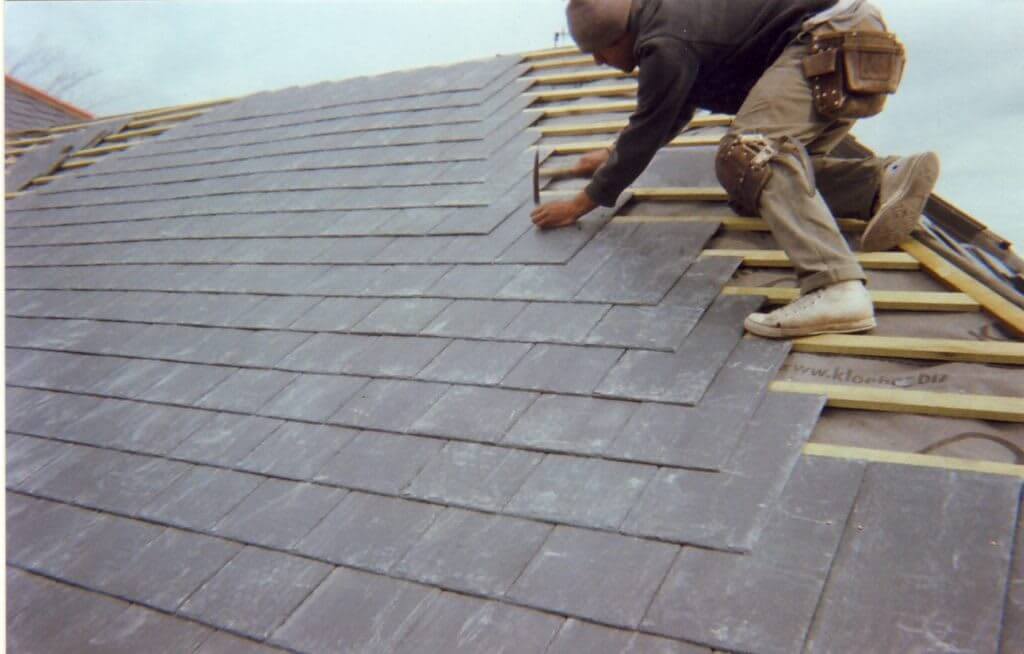
| Synthetic Slate/Shake | High-end luxury properties | Extreme longevity; fire resistance | High material cost; specialized fasteners | High (requires specific spacing) |
| Impact-Resistant (Class 4) | Hail-prone regions | Insurance premium discounts | Higher upfront investment | Moderate (material is stiffer) |
Decision logic for choosing the right path depends on regional weather, budget constraints, and the intended duration of ownership. In hail-prone areas, skipping Class 4 shingles is often one of the most significant common roof shingle mistakes regarding long-term financial planning. Conversely, using luxury synthetic materials on a low-value structure may not provide a viable return on investment.
Applied Logic In Real-world Scenarios
Real-world roofing scenarios often present challenges that standard manuals do not cover. For example, a “re-roof” or “overlay” involves installing new shingles over old ones. While this saves on labor and disposal costs, it often conceals structural damage and prevents the installation of new, high-quality underlayment.
Consider a scenario where a roof has a very steep pitch (greater than 12:12). Standard nailing patterns are insufficient here; gravity pulls on the shingles with such force that they can slide off the fasteners if not “hand-sealed” or secured with additional nails. Ignoring these slope-specific requirements is a recipe for catastrophic sliding in the first heat wave.
In coastal environments, salt spray and high winds create a unique failure mode. Using standard galvanized nails instead of stainless steel can lead to fastener corrosion within a decade. This second-order consequence is often overlooked during the initial bid phase but leads to shingles blowing off even in moderate storms.
Scenario: The Complex Valley Transition
In a valley where two roof planes meet, the “closed-cut” method is popular for its clean look. However, if the shingles are not trimmed back far enough from the center of the valley, water can “bridge” across the cut and get trapped underneath. This leads to ice damming and rot in the most vulnerable part of the structure.
Scenario: The Chimney Counter-flashing
Many installers simply use caulk to seal the top of flashing against brick. Over time, the caulk dries and shrinks. The correct professional approach is to cut a “reglet” or groove into the mortar, tuck the metal flashing inside, and then seal it. Skipping this step is a common roof shingle mistake that results in recurring leaks.
Planning, Cost, And Resource Dynamics
Financial planning for a roof must account for more than just the shingles themselves. Labor typically accounts for 60% to 70% of the total cost. When a homeowner chooses the cheapest bid, they are often inadvertently choosing the installer most likely to commit common roof shingle mistakes due to the need for speed over precision.
Hidden costs often arise during the tear-off phase. If the underlying plywood (sheathing) is soft or rotted, it must be replaced. Attempting to nail shingles into compromised wood is a major error, as the fasteners will not have the necessary “withdrawal resistance” to hold the shingles during a wind event.
| Category | Entry-Level Scenario | Professional Standard | Enterprise/High-End | Key Nuance |
|---|---|---|---|---|
| Underlayment | 15lb Felt Paper | Synthetic Polypropylene | Full Self-Adhered Membrane | Synthetic is safer for installers |
| Fasteners | Galvanized Steel Nails | Ring-Shank Coiled Nails | Stainless Steel (Coastal) | Depth of drive is critical |
| Ventilation | Static Box Vents | Continuous Ridge Vents | Powered/Solar Attic Fans | Requires balanced intake air |
| Flashing | Aluminum Coil Stock | Pre-bent Steel Steps | Custom Copper Details | Mixing metals causes corrosion |
Budget-friendly strategies should focus on high-quality labor and mid-grade materials rather than low-quality labor and high-end materials. A perfectly installed 3-tab shingle will outperform a poorly installed architectural shingle every time. Cutting waste involves precise measurements and ordering the correct amount of “starter strips” to avoid using cut-up shingles in high-wind areas.
The Professional Toolkit And Ecosystems
Modern roofing relies on a suite of tools that go beyond the hammer. Pneumatic nail guns are the industry standard, but they require constant calibration. A common roof shingle mistake is setting the compressor pressure too high, which causes the nail head to “blow through” the shingle, effectively leaving it unattached to the roof.
Moisture meters and thermal cameras are becoming standard for professionals during the inspection phase. These tools identify “hidden leaks” that have not yet manifested as ceiling spots. Identifying these issues before the shingles are laid ensures that the substrate is dry and structurally sound.
Digital estimating software and drone surveys have reduced the human error associated with manual measurements. However, these tools have limitations; they cannot feel the “crunch” of rotted wood or the looseness of a flashing transition. The best integration involves using technology for scale and human touch for detail.
The Role Of The Starter Strip
One of the most overlooked “tools” in the roofing ecosystem is the dedicated starter shingle. Many installers still use a standard shingle turned upside down. This is a common roof shingle mistake because modern shingles do not have the sealant strip in the correct location when inverted, leaving the first row vulnerable to wind uplift.
Ventilation Calculation Tools
Professionals use the 1:150 rule (one square foot of ventilation for every 150 square feet of attic floor). Without these calculations, a roof can “suffocate,” leading to shingle blisters. Relying on guesswork rather than mathematical modeling for ventilation is a foundational error in roofing strategy.
Risk Landscape And Failure Modes
The risks associated with roofing are both immediate (safety) and long-term (structural). Structural failure modes usually involve the weight of the roof. Adding a second layer of shingles can exceed the “dead load” capacity of the rafters, leading to sagging or even collapse under heavy snow loads.
Operational risks include the timing of the installation. Installing asphalt shingles in freezing temperatures can lead to “shingle shattering” or the failure of the thermal seal strip to activate. Conversely, working in extreme heat can lead to “scuffing,” where the installer’s boots tear the granule surface off the softened asphalt.
Human error is the most common risk factor. This includes everything from poor ladder safety to the “late Friday afternoon” syndrome, where the quality of flashing work declines as the crew nears the end of the week. These small lapses compound into systemic leaks that can cost thousands of dollars to remediate.
Fastener Over-drive And Under-drive
When a nail is driven too deep, it cuts the shingle. When it is not driven deep enough, the head stays proud and eventually wears a hole in the shingle overlapping it. This “nail pop” is a classic example of how a repetitive physical error creates a systemic failure across the entire roof plane.
Incompatible Material Reactions
Using plastic cement (tar) excessively can lead to chemical degradation of certain synthetic underlayments. Similarly, placing copper flashing against aluminum gutters causes galvanic corrosion. These chemical “mistakes” are invisible at first but lead to the rapid disintegration of metal components within a few years.
Governance And Long-term Mastery
A roof is not a “set it and forget it” system. It requires governance in the form of regular maintenance and periodic reviews. Static systems fail because they cannot adapt to environmental changes, such as the growth of nearby trees or the accumulation of debris in the valleys.
Mastery of roofing involves a commitment to ongoing education. As manufacturers change their “recipes” for asphalt and fiberglass, installation requirements shift. A professional who has not updated their knowledge in ten years is likely committing several common roof shingle mistakes simply by adhering to outdated best practices.
- Biannual gutter cleaning to prevent water back-up under the eaves.
- Post-storm inspections for granule loss or loosened ridge caps.
- Annual check of attic insulation to ensure soffit vents remain unobstructed.
- Checking sealants around plumbing boots every three to five years for UV degradation.
- Removing moss or algae growth using non-pressure chemical washes to preserve granules.
Dynamic adaptation also means being willing to upgrade components mid-cycle. If a specific vent is prone to leaking in wind-driven rain, replacing it with a high-profile baffled unit can extend the life of the entire system without requiring a full roof replacement.
Measurement And Evaluation Of Success
How does one measure the success of a roofing project? Leading indicators are the signs you see during installation: the straightness of the courses, the cleanliness of the job site, and the sound of the nail gun. A consistent “pop-pop-pop” rhythm indicates a calibrated tool and a focused installer.
Lagging indicators are the long-term results. The absence of leaks is the obvious one, but energy bills are another. A roof that is properly ventilated will result in lower cooling costs during the summer. If attic temperatures are significantly higher than the ambient exterior temperature, the roofing system has failed its thermal mandate.
Documentation is the final piece of the evaluation puzzle. A professional should provide a “closing packet” that includes photos of the flashing, the underlayment, and the nail patterns used. This transparency proves to the stakeholder that common roof shingle mistakes were avoided during the hidden phases of construction.
Thermal Differential Testing
Using an infrared thermometer to check the underside of the roof deck can reveal “hot spots.” These areas indicate poor air circulation. Correcting this early prevents the asphalt from becoming brittle, which is the primary cause of premature shingle loss.
Fastener Pull-out Resistance
In high-wind areas, professionals may perform a pull-out test on the sheathing to ensure the wood can hold the fasteners. If the wood fails this test, no shingle, regardless of quality, will stay attached. This data-driven approach removes the guesswork from the installation process.
Common Misconceptions And Myths
The roofing industry is rife with myths that mislead both homeowners and inexperienced contractors. One of the most prevalent is that “heavy shingles are always better.” While weight can indicate material density, modern thin-film technology has allowed manufacturers to create incredibly durable shingles that are lighter and easier on the home’s structure.
Another myth is that “caulk can fix any leak.” Caulk is a temporary sealant, not a structural component. Relying on caulk in place of proper metal flashing is one of the most common roof shingle mistakes. A correctly flashed joint should be water-tight even without any sealant applied.
Many believe that a new roof can be installed over a wet deck if the sun is out. Trapping moisture between the new underlayment and the old wood leads to mold growth and “deck rot.” The wood must be allowed to dry completely, typically reaching a moisture content of less than 15%, before any new materials are applied.
Myth: All Underlayment Is The Same
The idea that standard felt paper is “good enough” ignores the benefits of synthetic materials. Synthetics do not wrinkle when wet, providing a flatter surface for shingles. Using felt paper in high-humidity environments often leads to “telegraphing,” where the wrinkles in the paper show through the shingles.
Myth: More Vents Are Always Better
Over-ventilating or mixing different types of vents (e.g., combining a ridge vent with a powered fan) can actually short-circuit the airflow. This can pull air in from the ridge rather than the soffits, bringing in rain or snow. Balanced ventilation is the goal, not maximum ventilation.
Ethical And Practical Boundaries
Roofing involves trade-offs between cost, speed, and quality. An ethical dilemma often arises when an installer discovers a problem that was not in the original bid, such as rotted fascia or disconnected vent flues. Ignoring these issues to stay on budget is a common roof shingle mistake that compromises the entire project.
There are also practical limits to when a roof should be repaired versus replaced. If a roof has lost 30% or more of its granules, the UV protection is gone. Patching individual shingles at this stage is a “gray area” that often provides a false sense of security while the rest of the roof continues to degrade.
Finally, environmental constraints are becoming more relevant. The disposal of asphalt shingles in landfills is a significant environmental burden. Choosing shingles with recycled content or participating in shingle recycling programs is a way to mitigate the ecological footprint of the construction process, though these options are not available in all regions.
When To Walk Away
Professionals must recognize when a structure is too compromised to support a new roof. If the rafters are cracked or the foundation has shifted significantly, applying new shingles is akin to painting over rust. In these cases, the correct path is to address the structural issues before proceeding with the exterior finish.
The Constraint Of Labor Shortages
The current era faces a shortage of skilled roofing technicians. This has led to an increase in “unskilled” crews who may not understand the technical nuances of flashing or nail placement. This labor reality means that site supervision has become the most critical factor in avoiding common roof shingle mistakes.
Logic Synthesis
Success in roofing is achieved when technical precision meets a holistic understanding of the building’s environment. The avoidance of common roof shingle mistakes is not merely a matter of following a manual; it is the application of judgment regarding material compatibility, thermal dynamics, and structural integrity. Every nail driven and every piece of flashing bent represents a decision that affects the home for decades.
The transition from a beginner’s view of a roof as a simple covering to a professional’s view of it as a complex system is the hallmark of mastery. By prioritizing the invisible layers—the ventilation, the underlayment, and the fasteners—one ensures that the visible layer can perform its job. Ultimately, the durability of a roof is determined by the discipline of the installer and the quality of the planning long before the first shingle is laid.
True roofing excellence resides in the intersection of rigorous systemic processes and the adaptability to handle unique architectural challenges with seasoned expertise.
Frequently Asked Questions
What Is The Most Common Cause Of Shingle Blow-offs?
The most frequent cause is improper nail placement, specifically “high-nailing” where the nail misses the reinforced sealing strip. This prevents the shingle from being securely anchored and allows wind to catch the underside of the material.
Can I Install New Shingles Over My Existing Roof?
While building codes often allow for two layers of shingles, it is generally discouraged. Adding a second layer traps heat, prevents the inspection of the roof deck, and adds significant weight that can stress the home’s framing.
Why Are My New Shingles Not Laying Flat?
This is often due to “telegraphing” from wrinkled underlayment or installing the shingles in cold weather. Most shingles require the heat of the sun to activate the thermal seal strip and allow the asphalt to soften and settle into place.
How Important Is Attic Ventilation To My Shingles?
Ventilation is critical; without it, heat builds up in the attic and “bakes” the shingles from the inside out. This leads to premature aging, curling, and the loss of protective granules, often cutting the roof’s lifespan in half.
What Should I Do If I See Granules In My Gutters?
A small amount of granule loss is normal on new roofs (excess from manufacturing). However, consistent or heavy granule loss on an older roof indicates that the asphalt is drying out and the shingles are reaching the end of their functional life.